

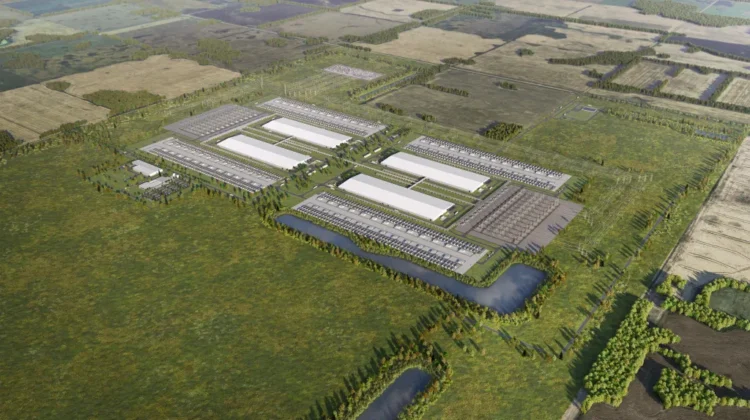
Alberta is taking its AI data centre strategy directly to residents through a new public information hub and a series of town halls scheduled across the province.
The engagement follows a rapid increase in proposed data centre investment and growing questions about how large computing campuses will affect electricity, water, land and municipal infrastructure. The province says the sessions are intended to explain its rules and collect public input as the sector develops.
Technology and Innovation Minister Nate Glubish will host in-person meetings in Ponoka on August 19, Sturgeon County on August 20 and Grande Prairie on September 11. Premier Danielle Smith and Glubish are also scheduled to participate in a virtual town hall on August 27.
The timing is significant for Sturgeon County. Meta announced in July that it intends to build its first Canadian data centre there, a project expected to exceed C$13 billion and reach one gigawatt in its initial configuration. That announcement brought international attention to Alberta’s effort to attract hyperscale AI infrastructure and intensified scrutiny of the power required by such facilities.
Alberta says its approach rests on four commitments: project costs will not be shifted to Albertans, grid reliability will take priority, water use will be controlled and residents will share in the financial benefit through municipal taxes, royalties and a levy on data centre computing equipment.
The province’s online hub explains how residents can participate in municipal discussions, provide information to regulators and file statements of concern. It also presents Alberta’s position on grid connections, private power supply, water licensing and the costs of transmission and generation infrastructure.
Those issues are increasingly central to site selection. Alberta’s abundant natural gas, competitive tax structure and deregulated electricity market have made the province attractive to developers looking for large blocks of power. At the same time, the provincial grid cannot accommodate every proposed project without new generation, transmission or behind-the-meter supply.
The government says developers will be responsible for the infrastructure needed to serve their projects. Its strategy places particular emphasis on protecting existing electricity customers from costs created by large new loads.
Water will also be a focus of the public discussion. Data centre demand varies widely depending on cooling design, climate and facility size. Newer closed-loop and dry-cooling systems can sharply reduce on-site consumption, but communities and regulators are seeking clearer project-level information before approving major developments.
Alberta estimates that its strategy has attracted between C$100 billion and C$200 billion in potential private investment. That figure represents prospective projects rather than completed construction, and the eventual total will depend on financing, customers, permitting and power supply.
The town halls give the province an opportunity to test whether its safeguards address public concerns as effectively as its investment strategy addresses developer demand. They may also provide an early indication of the province-wide standards Alberta could require as AI data centre proposals move from announcements into permitting and construction.